[00:00.0]
Good morning everyone and welcome to our webinar this morning. I am Ted Reinhart, Retirement Plan and Institutional Director here at JFS Wealth Advisors. I will be your host and moderator for today’s webinar. Today’s discussion is entitled Understanding Non Qualified Retirement Plans and Waiting through Unconventional Options.
[00:22.6]
Throughout the presentation this morning we will be covering common non qualified plan types, tax considerations for each plan type, and how to choose the right plan for your goals. While many businesses and business owners focus on the ever growing fiduciary rules and regulations covering qualified retirement plans as they should, providing additional benefits to themselves and or key employees plus any tax savings that accompany these types of plans can be a really huge win.
[00:54.6]
Non qualified plans may be an untapped resource for many business owners that may not have thought to look into these types of plans previously. With me today to review these topics is Al Lorenzi, Principal and co Founder of the LRM Group.
[01:09.8]
As principal and co founder of the LRM Group, Al focuses exclusively on providing objective insurance consulting support to fee based and fee only advisor and advisory firms. As an independent insurance advisor and advanced insurance planning consultant, Al’s emphasis is rooted in insurance plan design and consultation for a broad range of financial, professional, trust companies, tax and legal counsel.
[01:39.4]
Al specializes in partnering with advisors in a consultative process to assist in the areas of personal estate, business and charitable planning. His work often includes the design of non qualified deferred compensation, executive bonus and supplemental retirement strategies to support business succession and key employee retention planning.
[02:04.0]
He also brings additional expertise to assist with the review and analysis of existing insurance policies. Al began his career with Northwestern Mutual in 2001, received his Bachelor’s degree from Robert Morris University as a certified Exit Planning Advisor and a non qualified plan consultant through the national association of Plan Advisors.
[02:28.6]
He serves on the Board of Directors from the for the Pittsburgh Chapter of the Exit Planning Institute. Alan his wife reside in Jefferson Hills, Pennsylvania along with their two sons. Before I kick it over to Al, three quick housekeeping items that I want to just review real quick. Number one.
[02:46.7]
Please see the Q and A function at the bottom of your screen. If you would like to submit a question or questions for the Q and A part of our session following the presentation, please submit through this function and I will certainly monitor that as we go through Al’s presentation. Here.
[03:04.7]
Number two we control the microphone mute feature so you will notice that your Microphone is turned off so unintentional background noises do not interfere with the presentation. And lastly, should you need to depart early or if you would like to listen to the presentation again, this webinar is being recorded and will be available to all attendees within the next few days.
[03:27.3]
Without further ado, I will turn the presentation over to AL to walk us through the key topics for non qualified plans. Thanks Ted. And thank you to JFS for having me today. Before we dive into all the world of non qualified plans, let’s start with why is this even important?
[03:49.4]
Why would companies want to consider a plan like a non qualified plan for their organization? And really what that has to do with is three things. Recruiting, retaining and rewarding key individuals in the organization.
[04:09.2]
So you know, a non qualified plan, unlike a qualified plan. So we like to keep things simple. A qualified plan. And you know, Ted is heads up the qualified plan department, for jfs, those plans you have to do for everyone the same thing.
[04:27.4]
Non qualified plans, you don’t have to have the same rules and restrictions. And with non qualified plans you can do for a select group. And typically that select group is people that you want to reward above and beyond, the benefits in the organization that is offered to everyone.
[04:49.8]
And at the same time you want to retain and hopefully potentially recruit top talent, to the organization. Because as a business owner you know that this is a big challenge. You know, if you have employee turnover that costs money, that’s extra time and resources.
[05:09.1]
So if we could put together benefit packages that layer on top of the group plan for everyone else that could potentially help reward and retain key individuals and how I like to kind of phrase, you know, the risk that most companies have, it’s the human capital risk.
[05:30.1]
Okay. If you think about it, the most successful organizations, they understand that their people are their biggest assets. And so you know, when they look at risk across an organization, they a lot of times have different insurance or protections in place for various risk of, you know, and you can see that on the left side, you know, the types of things that companies protect, the things that kind of go fly under the radar.
[05:56.5]
So to say is that human element, okay, and what are we doing to ensure or protect that our key individuals in an organization stay here long term? Okay.
[06:13.1]
So you know, when we think about these non qualified plans, I always like to start like why is this important? And I think, you know, employee retention and rewarding and retaining top talent is really, really critical to the success of an organ.
[06:30.4]
And think about it in a couple different ways. Okay. One, think about are there People that if they came in to your office tomorrow to put in their two weeks anxiety would go super high and you’d be like, oh no, we’re getting in trouble. Okay.
[06:49.1]
I like to say these people are what I refer to as mission critical employees. Okay. So these are you know, employees that are critical to the success of the company that if they weren’t here tomorrow, you know, these are the folks that you want to think about for potential non qualified plans or some type of employee retention program.
[07:13.1]
I don’t know who said this, but I heard this in a conference one time and I thought it was just really interesting kind of to you know, frame it a little bit different where again these employees are the biggest assets. They walk out the door every evening and we’re really hopeful that they come back to make that business hum and be successful and to use that to grow enterprise value and protect enterprise value.
[07:46.0]
So obviously the answer to today’s question about what you do to retain, reward and recruit key employees is non qualified plans. And you know, today we’re going to do a high level kind of overview of what the various plans are and how they could work. Okay.
[08:10.1]
And you know, when we think about these different areas, you know people, companies can always pay an additional bonus or different compensation packages. But what are ways that we can offer employees above and beyond that to retain them in that organization long term, that you can have less stress or anxiety, that you know, when they walk out that door in the evening, they’re coming back the next day or the next working day, so to say, so today we’re going to cover a couple different types of plans in the non qualified world and we’re going to go through some of the pros and cons and tax features in each of the plan and then we’ll do a high level kind of overview of all the plans and kind of a comparison.
[09:04.9]
But before we dive into each plan, I wanted to give you an overview of kind of how non qualified plans work. Okay. And I always like to start here because there’s an interesting kind of way that these plans are structured a little bit different than a qualified plan that just we don’t want to skip. Okay.
[09:28.1]
So there’s kind of four steps. The first step is we want to identify who that select group is, who those key employees are. And in most cases if the plans governed under section 409A, which some of the non qualified plans are, okay.
[09:46.7]
It says that you must Discriminate. So you can’t do this for everyone based on those laws. And I think that’s kind of interesting that the laws are written, for these plans that requires you to discriminate, which seems like a dirty word.
[10:02.6]
And a lot of business owners are like, I thought we had to do everything the same for everyone. So again, just a different type of a plan, a different type of approach. All right, so step one again, identifying who’s that group.
[10:19.1]
And then in some plans there’s an actual deferral or there’s a contribution to the plan. And any money that’s put into the plan is recorded as a liability on the balance sheet. Okay? And this is not money that’s like in a 401k set aside in a separate account.
[10:40.6]
And basically the participants of a non qualified plan are a creditor to the company. So they’re at, at some level at risk. If the company did go under, they may not get their money. Okay.
[10:58.8]
And so that’s a distinct difference between a non qualified plan and a qualified plan where in a, you know, 401k or some qualified plan you’re actually putting money in a separate account. This is going on as a liability and you do not have a requirement to fund for that liability.
[11:19.4]
So you could have an unsecured promise to pay these funds in the future. Okay. Now step three, all the plans that I have done, Ted and I have worked on in the past, we do, set up some informal funding.
[11:37.2]
So I think it’s prudent if you’re going to make a promise to pay money, to a key employee or they’re deferring some money to put into this plan, they’re actually taking real money and putting it off to the side to fund for these obligations in the future.
[11:58.9]
The analogy I like to use with companies is if you had kids or know anyone that has kids, it’s kind of like college planning. Like, okay, I have this liability. Potentially in the future I could either, you know, start saving now for that or you know, when they go, if they go, I’ll figure it out and pay it out of cash, flow.
[12:21.3]
And we can imagine how that would go, in a deferred compensation plan if you didn’t fund for it and then all of a sudden you have people retiring, investing and you have to pay out, the cash flow in the business is only equipped to do so much and that would be a, heavy strain on the company.
[12:42.8]
And then the last stage is the distribution stage. So a lot of these plans will have a vesting schedule. They’ll have triggering events, such as retirement, separation of service, disability, death, whatever that triggering event is.
[13:01.1]
And there’s rules on how that is paid out, to the participants. So at a high level, this is how these plans are kind of set up. Okay? So let’s first look at a true non qualified deferred compensation plan.
[13:18.4]
And in this plan, this is where executives are deferring extra money above and beyond the 401k, pre tax into an account. Now in this account there could be you know, employer match or contribution as well. Okay.
[13:40.7]
Where we see some of these plans is layered on top of a 401k where executives that have a very high income want to or need to defer extra money to hit their retirement goals and they want to defer that tax into the future similar into their, like they’re using their 401.
[14:02.7]
Okay. The other way that we see some of these plans, work in conjunction with a 401k is let’s say there’s a group in the company that are, you know, limited on contributions or phased out of contributions because of testing companies, will put this in place to give them a place to defer money, for retirement. Okay.
[14:29.0]
Now in these plans, again they’re a liability on the books of the corporate balance sheet. And under section 409A, there’s triggering events if you retire or become disabled, or you pass away.
[14:51.3]
They could be paid out. And we can in the plan, outline how those work. But on these plans we can put a vesting schedule only on the employer portion of the contribution. The employees, if they’re deferring money into this, there can’t be a deferral, I mean a vesting schedule on their deferral. Okay.
[15:15.4]
Now how this is treated from a tax standpoint, because the corporation owns this account, executives is deferring. They’re not picking that up as income today. Okay. They do have to. The FICA is factored into the deferral today.
[15:34.3]
And if the employer’s portion in the future, whenever they become vested, the FICA may be due depending on their income and other factors. But for the employer, the the tax deduction is not realized until money is paid out to that participant.
[15:55.0]
Then it’s done through payroll and they get a tax deduction because they’re paying it out as compensation. And that’s where the employer and employee will, pick up the tax. Okay, so this plan is again, one where we could have employee deferral and employer contribution.
[16:18.1]
Sometimes you run it as a 401k Meer plan, meaning that the deferral and the match are the same formula. Or it could be something different. Okay. The other version of a non qualified deferred comp, a cert plan is 100% employer funded, so no employee money.
[16:41.9]
So it works similar to the non qualified deferred comp plan. Is governed under all the Same rules of 409A. The big advantage here for employers is they control what goes into that account 100% and there’s no employee contributions at all.
[17:02.3]
So this could be, you know, a great golden handcuff for key, individuals where you can put money in these plans additionally for retirement and put some vesting schedules, that they’d have to stay for a certain amount of years or they’re phased in over a period of time.
[17:22.3]
And so we can get really creative with a SERP plan. One of the things that you could do is run it like a profit sharing plan for that select group to incentivize those key individuals, to, you know, have some skin in the game, so to say.
[17:41.4]
So I’ve had companies in the past where they want to reward, some of the top talent based on how the company performs and then give them some skin in the game so that they are more cautious about how they’re using their time, corporate resources and stuff like that to make the company more profitable.
[18:00.8]
But they don’t want to give them actual ownership or stock in the company. These plans are what I call, you know, contribution plans. So you can define what the contribution is each year.
[18:16.1]
It could be, you know, nothing, it could be a lot, or it could be a little. So there’s no, contribution limits into these types of plans. These plans, do you can have some flexibility, on the vesting.
[18:34.6]
So for example, you could do a rolling vesting schedule. So each contribution has its own vesting schedule. So let’s say we make a contribution today and it has a vesting schedule of 10 years. Then next year we make another one, it has another 10 years, and so on and so on. So you have this.
[18:54.0]
It’s never a good time to kind of retire. We could do cliff vesting. And we’re, you know, you’re not vested in anything until, you know, 65 or pick an inch. Okay. And in these plans the corporation owns the account.
[19:11.3]
We’re still setting up that liability, for what’s in the plan and we creating that informal funding of having an account owned by the corporation where we’re putting money into that to fund for those liabilities.
[19:27.5]
And we’ll get into the informal funding just a little bit. Sometimes what we’ll see is traditional investments in that informal funding. Sometimes we’ll see life insurance in those informal fundings. And the life insurance policies are you know, really strictly kind of corporate only kind of life insurance policies that we use that help kind of grow assets.
[19:54.2]
And one of the main reasons that corporations will use life insurance in the deferred compensation plans is any growth in the cash value grows tax free. So it’s one of the few assets that a corporation can own that’s going to grow tax free because the contributions for the participants are growing.
[20:17.8]
They can pick, you know, different mutual funds. We could set it up where there’s a menu of mutual funds similar to the 401k that they can pick from. And you know, we’re tracking that liability. So if those aren’t growing by taxes, it would make sense that the employer’s informal funding isn’t, you know, having that tax drag.
[20:41.9]
So these are things that we would look at and you know, review with clients to figure out what’s the best funding source, for these plans. On the back end, once people are paid out, just like the other non qualified deferred compensation plan right through payroll, you’re getting a tax deduction at that point, they’re picking that up as compensation and paying tax at it.
[21:06.2]
Once they’re vested in separation, from service. The next plan that I just want to talk about go over is a 162 bonus plan. This plan is not governed under section 409A, so you have a little bit more flexibility under those rules on who we can include.
[21:28.0]
And how this plan basically works is, you know, an executive would have a life insurance policy. The corporation would pay the premium on the life insurance policy. So they’re getting a deduction since that is compensation for, paid out as a, bonus to this executive.
[21:49.0]
And the executive would have to pay tax on that contribution. You could do what’s referred to as a double bonus. So you’re paying the premium and deducting that and then bonusing them a little bit extra to neutralize what the tax is to that individual.
[22:08.0]
And, one of the things that we’ll see with plans like this is we add a restrictive endorsement onto the plan. And what that is is it limits the ability for the executive to access any of the cash value in the plan.
[22:27.3]
And it could create, an obligation if they left or didn’t meet up to the servicing agreement in there, that they would have to pay some or all of that money back into the organization. But one of the, you know, keys here to realize is the executive owns the account, they own the policy.
[22:52.7]
So, you know, to get that money back from them, they would have to write that check. You’d have a legal document to be able to create that, you know, money coming back. But you would need them to take some action. It could be, subject to, some litigation if it’s questionable.
[23:14.7]
But the big advantage to, these plans for employers is they’re really simple. You get a current tax deduction today, and then the executive is getting life insurance for their family plus the cash value that’s growing, inside the policy that they could use, for retirement purposes.
[23:38.1]
Next, split, dollar is a very common tool used in corporations. For a select group, there’s two different types of split dollar. The collateral assignment and the endorsement. And basically split dollar is a way for a corporation and an executive to share in the benefits of a life insurance contract.
[24:04.1]
So in the, we’ll start with the endorsement side because it’s a lot more simplistic. So in the endorsement side, typically what we would see is the corporation would own the policy and they would endorse some or potentially all of the death benefit to the executive’s family.
[24:24.8]
Okay, so we’ll just say it may be, it’s a million dollars for an example. So a Corporation may buy 1.5 million of life insurance on this executive, retain a half million for key person that says, hey, if God forbid, you know, they don’t make the breakfast call tomorrow, we want to, you know, protect our business because this is a key person in the organization and then will allow a million of that to be endorsed out, to his family.
[24:56.7]
So in the endorsement, there’s some imputed income to the executive so that that million dollars is still going tax free. So there is some tables that are used to calculate what that, cost is of having that benefit for his family.
[25:17.2]
And normally it’s a fraction of what an actual life insurance term life insurance, cost would be, for his family. So, the good news is they’re able to get a benefit for their family at a fraction of what it would cost.
[25:34.6]
And good news for the corporation, they own the policy. So if that executive left, they can’t necessarily take it with them. And if they wanted to, that could be a negotiation or a bargaining chip as the company could talk to them about hey, we could transfer this policy to you but we want a stronger non compete or something signed as a result.
[25:58.2]
Or maybe we want you to stay on a couple more weeks to help kind of train your replacement. Okay. The other version that gets a little bit more complicated is the collateral assignment, which could be a loan regime.
[26:13.8]
And basically this is where the executive is owning the policy and the corporation is basically paying the premium but it’s treated out as a loan to that executive. And the policy is collateralized by the company and they potentially owe that money back or it could be forgiven.
[26:38.3]
Down the road, we see a lot of the collateral assignment loan regime kind of split dollar in the non profit world or in a C corp Where you know, the, with owners could you know, lend out money through this kind of a strategy.
[26:56.8]
And, and get some money out of the corporation a little bit less of a tax, you know, liability, but it can be used in a variety of different ways. And again, you know, what we see with executives as towards retirement is the companies are loaning these premiums to the executives and then eventually what happens is they forgive that loan and they have to pay tax on it and they’ll use some of the cash value inside the policy to pay Uncle Sam and they have the policy with the excess cash free and clear that they can use for estate planning or you know, their personal living expenses in retirement.
[27:43.9]
So when we look at, you know, and there’s more plans than just this, there’s you know, a deferred bonus plan which is becoming more popular. But generally speaking we’re working with employers.
[27:59.3]
These are the kind of the plans that we usually start with, if we want to retain reward key, talent. You know, we’re looking at these various different types of plans and really you know, depends on what you’re looking for.
[28:18.6]
You know what I mean? So and that’s why you know, we just said, all right, the features like who funds these? That’s important. And then who controls it? Really important. If you’re looking for you know, the, the strongest golden handcuff, you can see that the serp, the Executive has no controls.
[28:40.8]
So the SERP plan is definitely the, provides the strongest golden handcuff. And from a regulatory standpoint, if the Plan’s governed under 409A, we just need to make sure that we’re following the rules there.
[29:01.5]
We’ll typically, if it’s a 409A plan, we’ll partner with the TPA to administrate the plan to make sure that you know, it’s all in line. And those plans have to be filed with the dollar.
[29:17.6]
So the TPA will do the dol filing and everything like that. And you know really at the end of the day these things can get really complicated fast. And so you know, just think about you know, what plan and why. Okay.
[29:38.2]
you know again the non qualified deferred compensation plan, it’s really where we see it is where executives are looking or needing to defer extra money. Okay. So if you have those types of situations that may be a good area to start again.
[29:55.0]
Those are situations where you know, their deferral into the 401k is just you know, not enough based on their income to save for retirement or if they’re in a situation where they can’t contribute but because of testing issues to the current 401, then the non qualified plan would be an ideal thing to consider. Okay.
[30:16.5]
For a lot of employers the 401k is a great solution. Provides everything that the employees need to use for retirement. So if that’s the case then one of the other types of plans could potentially be appropriate.
[30:34.3]
Again the CEHRT plan is a kind of an employer only funded retirement plan for a select group. And then the 162 bonus would keep it you know, simplistic, but give that immediate tax deduction.
[30:53.0]
And with the split dollar it’s just a way to share some of that. Either the death benefit or also the cash value, split out between the employer and employees. Okay, so this all sounds great.
[31:12.0]
Where do you go from here? What would be the potential next step? And really I think the first step is who are those mission critical employees? Who are the folks that you know, what we want to retain, we need to retain, for the success of the company.
[31:34.2]
And so from there then I think you schedule a meeting with an expert to help understand your situation better and then they can bring a plan to you that most aligns with your goals.
[31:51.6]
Because one of the I think blessings and a curse in the non qualified world is there’s so much customization that you could do. So you know, we wanted to keep it kind of high level today. But each of these areas get incredibly granular on all the different things that you can do and all different ways that you can put it together.
[32:16.9]
So what I try to do, and I know Ted does the same, is try to get a deep understanding of what the goals and objectives are and then present you. Okay, here, here are a couple plans that I think would be most appropriate. And then from there we would engage, you know, other advisors, your accountant, your attorney, potentially a TPA, especially if we’re using a 409A plan, and look to create the actual plan and stuff like that and then review, you know, the funding options.
[32:53.3]
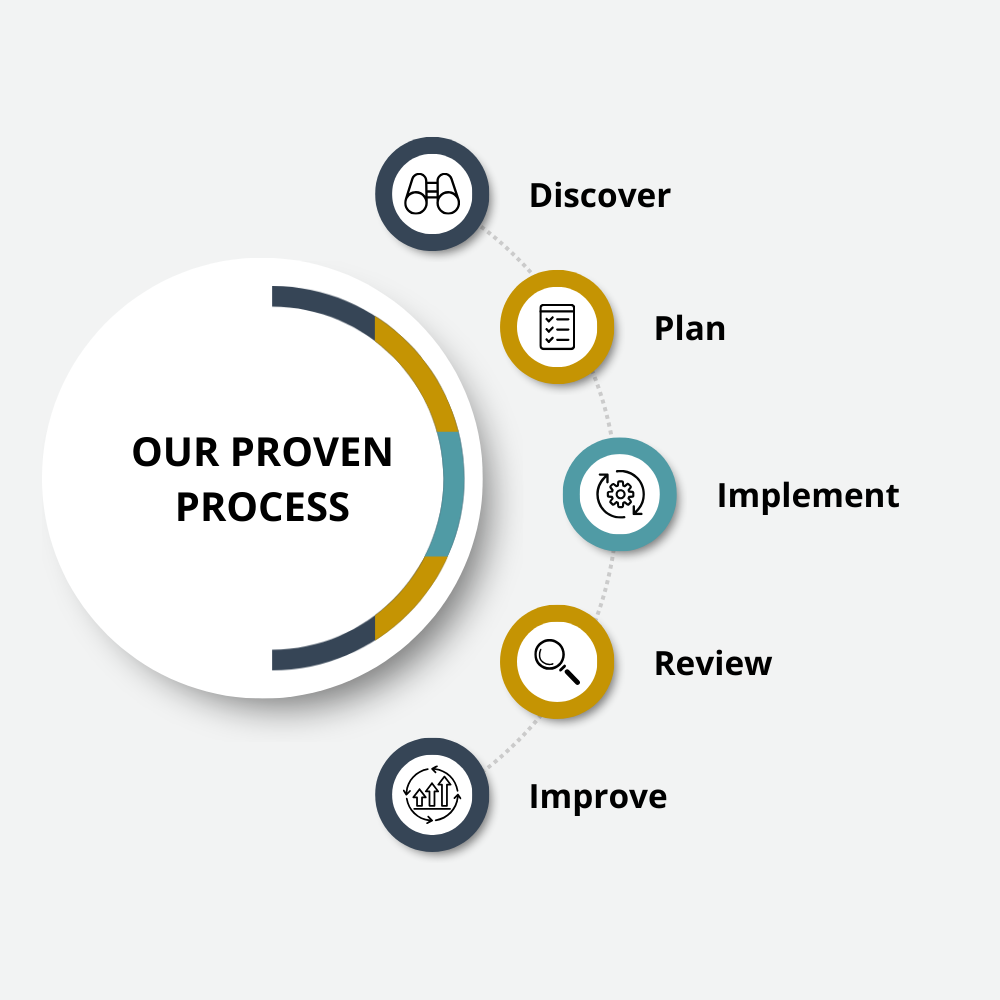
So in the funding options, again we’re going to review, okay, how best to fund these plans. Should we use traditional investments, should we use life insurance? What is the best tool to fund for these plans. And those are the kind of the steps to put a plan in place.
[33:12.0]
The other important step here is having an annual check in or a check in periodically to review. You know, how are things going, do people need to be added or maybe removed, from the plan and how’s the, you know, is the funding in line with the liability and stuff like that?
[33:33.4]
So those are things that we do on after implementation.
[33:45.8]
So this is the JFS disclosure, page and then we’re going to move to any questions. All right, great. Thank you Al, appreciate it. Appreciate the the information and the knowledge. I kind of mentioned this at the beginning, but I really do feel that in 23 years working in the retirement plan world that you know, these kind of non qualified plans really are an untapped resource, that can be used much more than what we typically see.
[34:18.5]
So you know, certainly as Al mentioned, you know, this is stuff that we do. These are kind of plans that he and I work on. So if anyone is interested or has questions or as Al kind of went through the steps there of, you know, what’s next, you know, that’s where we can help.
[34:33.7]
That’s where we come in and can kind of, you know, could start those conversations from. For sure. Yeah. Just to build upon that. You know, it’s interesting because most Fortune 500 companies have these plans, so this isn’t like foreign for the large corporations.
[34:51.6]
What we’re seeing is we’re trying to bring it to the small business owners. Okay. And I look at it as, you know, most companies may have two or three really key individuals. If you lose one, that’s a high percentage. Where if you’re like some huge corporation that has 100 and some thousand employees and you lose one key person, you should be okay, you know, you know, so we’re just bringing the concepts that have been around for a long time in these big corporations down to smaller business owners which a lot of times they’re not real small companies, but you know what I mean. Yep, yep.
[35:33.2]
They’re not the the, the, the, the behemoths that are out there today. But certainly important to, to us, to the economy, to our communities as well. So Yeah, absolutely. Great. Point Al. Obviously we’re going to go through some question and answer here.
[35:51.0]
You know, if anybody that’s still on the call here has any questions, please feel free to put them into the chat function. That’s, that’s listed or that’s available down below. Al, there are a few questions here wanted to go through. You know, especially maybe you know, towards the end there, especially with the split dollar in particular.
[36:10.4]
You’re talking about life insurance. Right. And that’s used as kind of the investment vehicle of sorts, for those kinds of plans. You know, can you kind of go through what the different kind of investment vehicles are in the life insurance versus the more traditional mutual funds, ETFs, that sort of thing and kind of just give a high level overview of why life insurance versus those more traditional investments. Yeah.
[36:38.5]
And through the informal funding we look at different funding, options. So with the split dollar and the 162 bonus, it’s kind of exclusive to the insurance world. But on the non qualified deferred comp and the CERP, any plan that’s really under 409A, you know, you don’t have to fund for those.
[37:03.1]
So we, we could really use any kind of funding mechanism. The, the two that we evaluate probably on, on every case is traditional investments versus life insurance. So it just, it’s all about an the numbers.
[37:20.1]
For me it’s about you know, what’s the time horizon. So if it’s a short term kind of plan, traditional investments are probably going to be more favorable. But you have to consider the tax drag.
[37:35.7]
With the traditional investments, versus the insurance, you don’t have the tax drag, but you have the cost of insurance drag. And so sometimes what we find Is if these are key individuals, the corporation would benefit from having some key person coverage on them as well.
[37:57.0]
So that’s an added feature to having the life insurance. The long term added feature of having the life insurance is a way eventually once they pass the corporations retain these policies, they could recoup a lot of their costs, on the death benefit that’s still paid out, you know, maybe 30 years out or whenever the person passes.
[38:22.7]
So yeah, so and you know the plans that you and I have done together, we’ve, we’ve looked at both and I know the one that I’m thinking of, we use traditional investments over insurance but they were an esop so they didn’t pay tax. It was a little bit of a different situation.
[38:40.6]
Yeah. And one thing I wanted to mention too, earlier too and you know we sit down with these, you know selected individuals that are participants in these non qualified plans. I mean you know, even the long term prospects for these individuals is phenomenal.
[38:57.1]
Can be phenomenal. So I don’t want to let, you know, let that go too. Yes, it’s important to you know, for retention of these employees and given like you know the golden handcuffs that you mentioned. But you know it can be a significant benefit that you know in certain situations depending on the plan they might not have to put a single dime in of their own money.
[39:17.6]
So it is phenomenal to be able to use and kind of as you talk about retaining key employees, how have you seen companies use these types of plans to recruit that kind of top talent which I think kind of goes above and beyond.
[39:35.1]
Hey, we have these people, we want to maintain them. This is actually recruiting those, those key employees. Yeah, there’s so many creative ways where we can use this at a company. About about a year ago I worked with and they were trying to recruit some top talent and they were in competition with ironically another competitor in their market for the same person.
[39:59.6]
And so we put together a deferred compensation plan as far as the, the offering to this person. So they did a hundred thousand dollar signing bonus to this person. But it went into the plan and there was a vesting schedule for this situation over a 20 year period where every five years was like 25% and then that 100,000 went into the plan.
[40:23.4]
He got to pick how that grew and you know that would be there. So it was just an interesting way to package something From a recruiting standpoint, to get that person and, and good news, they, they did get them on board and I talked to them earlier this year and they’re really excited, and it’s really working out well.
[40:52.9]
Great, great. Definitely a good example of you know, it’s not just putting something in place for today, it’s you know, something that could help the business for, for the continuous foreseeable future for sure. Last thing here, and you kind of mentioned this a little bit earlier Al, when you’re talking about you know, 401k plans and the non discrimination testing, that is required, if there are plan, owners or business owners, that for purposes of those non discrimination testing is kind of limited, you know, what they can put in as far as their own deferrals and contributions, you know, are there non qualified plans that are good for the owners of the companies as well and the businesses? Yeah.
[41:41.6]
So typically, because the account is owned by the company, there’s not an advantage for owners to participate in a plan. And I’m talking specifically about any pass through kind of organizations. Okay.
[41:59.8]
Which tends to be the bulk of the companies that we deal with. So if you’re a C corp, you know, or another kind of structure like an ESOP or something, maybe. But generally speaking, we do not put owners into a non qualified deferred compensation plan, because of the pass through, and it was really not at a tax advantage for them.
[42:29.5]
Okay. All right. Well Al, again appreciate your time and expertise here this morning. Thank you to all of our attendees on the call today. If you have a question that you do think of after we sign off here, please let us know.
[42:47.8]
Al and my contact information, email, information is there on the screen. And certainly as a reminder too if you missed part of the webinar or you’d like to re listen to it later on down the line. Recording will be sent via email to all attendees within the next few days.
[43:07.3]
We sincerely appreciate your attendance, hope you enjoyed the topic and learned something of value. We learned. We look forward to you joining us again in the future. Thank you very much and have a great rest of your day.